
The Complete Guide to Pruning in Spring and Summer
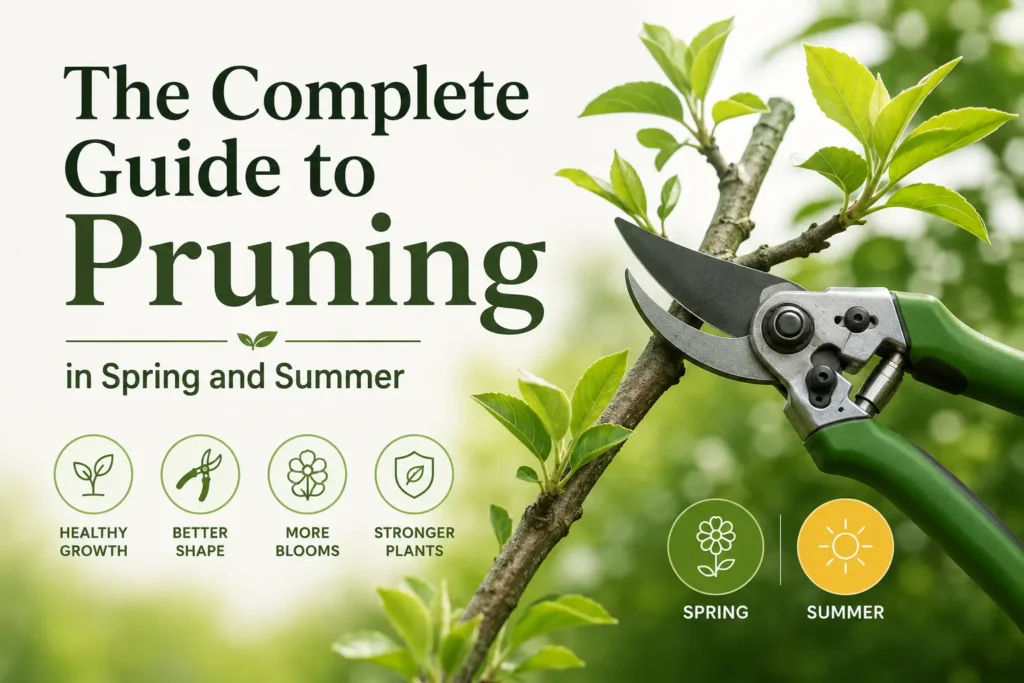
Pruning is one of the most important — and most misunderstood — tasks in gardening. Done correctly, it strengthens your plants, improves flowering, and keeps your outdoor spaces looking clean and vibrant all season long.
Why Pruning Matters
Many gardeners hesitate to cut their plants, fearing they will damage them. In reality, the opposite is true: plants that are never pruned tend to grow weak, overcrowded, and more susceptible to disease and pest infestations. Pruning removes dead or damaged wood, improves air circulation between branches, and redirects the plant’s energy toward producing stronger new growth, bigger flowers, and better fruit.
Think of pruning as a reset button for your garden. Each cut you make is an instruction to the plant: grow here, not there. Over time, this gives you full control over the shape, size, and health of every shrub, hedge, and tree in your outdoor space.
When to Prune: Spring vs. Summer
Spring pruning is ideal for most deciduous shrubs and fruit trees. As temperatures rise and the plant emerges from its winter dormancy, pruning stimulates vigorous new growth. The best window is just before the first buds open — this way, the plant channels all its energy into fresh, healthy shoots rather than maintaining old, unproductive wood.
Summer pruning serves a different purpose: it controls vigour. Once growth has slowed after the initial spring flush, a light trim in June or July helps maintain shape, prevents overgrowth, and encourages a second flowering in species like roses and lavender. Avoid heavy summer pruning during heatwaves, as freshly cut tissue is vulnerable to sun scorch.
Always prune on a dry day and clean your cutting blades with alcohol or a bleach solution between plants. This prevents the spread of fungal diseases from one specimen to another — a detail most beginners overlook.
What to Prune and How
The golden rule is to start with the three D’s: remove anything that is Dead, Diseased, or Damaged. Once these are gone, step back and assess the overall structure of the plant.
- Roses: Cut just above an outward-facing bud at a 45° angle. This encourages an open, vase-like shape that maximises air circulation.
- Hedges: Trim little and often rather than cutting aggressively once a season. A slight taper (wider at the base, narrower at the top) ensures light reaches the lower branches.
- Fruit trees: Remove crossing or inward-growing branches first. The goal is an open canopy where sunlight penetrates to every fruit-bearing shoot.
- Climbing plants: In spring, cut last year’s stems back hard to two or three buds to promote strong new growth from the base.
- Lavender and perennials: Cut back to just above the woody base after the first flush of flowers — never into the old wood, which rarely regenerates.
Choosing the Right Tool for the Job
The success of any pruning session depends heavily on using the correct tool for each task. Using the wrong implement — or a blunt one — causes ragged cuts that take longer to heal and leave the plant exposed to pathogens.
- Hand pruners (secateurs): For stems up to 1.5 cm in diameter. The workhorse of any gardener’s toolkit.
- Loppers: For branches up to 4–5 cm. The long handles give extra leverage for thicker wood.
- Electric pruning scissors: Ideal for extended pruning sessions. They reduce hand fatigue significantly and deliver clean, consistent cuts even in dense or thorny shrubs.
- Mini chainsaw: For branches over 5 cm and for tackling overgrown hedges or small trees. A battery-powered model gives you complete freedom of movement.
- Hedge trimmer: For flat, formal hedge surfaces. Electric models are quieter, lighter, and perfectly adequate for most domestic gardens.
Sharp blades are non-negotiable. A clean cut heals in days; a torn, ragged cut can take weeks and becomes an entry point for disease. Sharpen or replace your blades at the start of every pruning season — it takes five minutes and makes a visible difference to your results. Your tools are only as good as the condition you keep them in.
Common Pruning Mistakes to Avoid
- Pruning at the wrong time: Cutting spring-flowering shrubs (like forsythia or lilac) after they have set their buds means you sacrifice an entire season of flowers.
- Over-pruning: Removing more than one-third of the plant’s total volume in a single session causes shock and can stunt growth for an entire year.
- Ignoring wound care on large cuts: For cuts wider than 3–4 cm (e.g. on mature trees), apply a pruning sealant to protect the exposed heartwood.
- Cutting flush with the trunk: Always leave the “collar” — the slight swelling where the branch meets the trunk — intact. This is where the plant’s healing tissue is concentrated.
- info@gigamarkit.com