
Mini Chainsaw vs. Electric Scissors: Which One Do You Really Need?
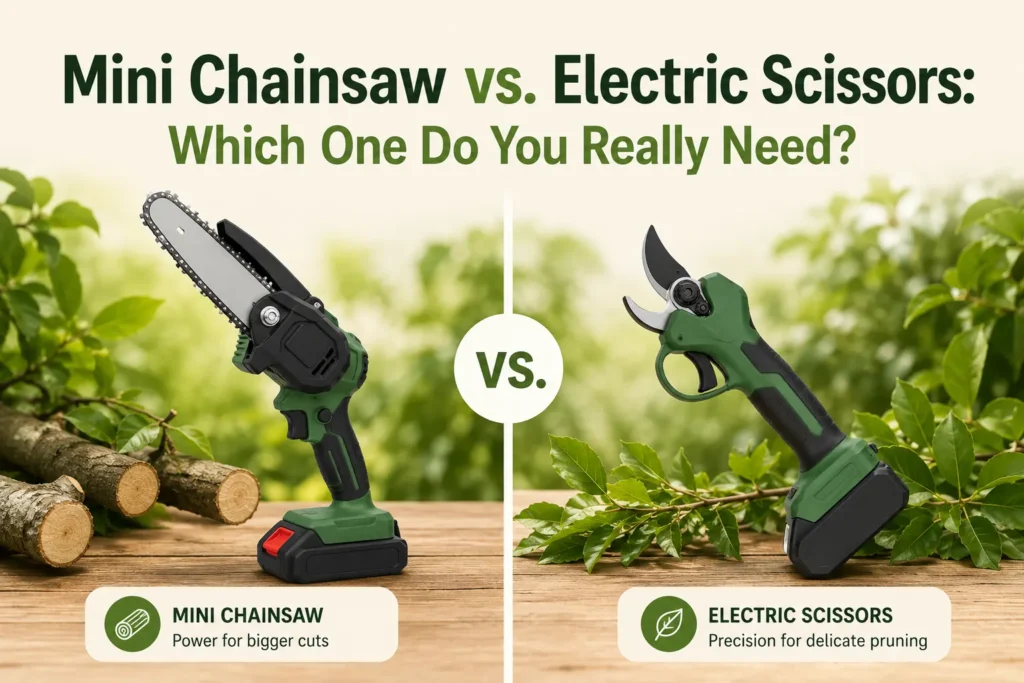
Walk into any garden centre or browse any online store and you’ll find both mini chainsaws and electric pruning scissors competing for your attention. Both are battery-powered, both promise to transform your garden work — but they serve very different purposes. Here’s how to choose the right one.
The Case for Electric Pruning Scissors
Electric pruning scissors — also called electric secateurs — are essentially motorised versions of the hand pruners you already know and love. A small motor drives a blade that closes with a single trigger press, eliminating the repetitive hand squeeze that causes fatigue during extended pruning sessions.
They excel at high-volume, precision work: rose gardens, vineyards, fruit orchards, or any situation where you need to make hundreds of identical cuts per session. The cutting diameter is typically limited to 25–30 mm, which covers the vast majority of pruning tasks in a standard domestic garden.
- Lightweight (usually under 800g) — ideal for overhead work
- One-handed operation leaves your other hand free to hold branches
- Very low noise — suitable for use in residential areas at any hour
- Minimal maintenance: wipe the blade, charge the battery, done
- Safe even for less experienced users
Electric scissors are the right choice if your garden contains roses, lavender, ornamental shrubs, small fruit trees, or a vegetable plot. They handle 90% of typical pruning jobs with ease and virtually no physical effort.
The Case for the Mini Chainsaw
Mini chainsaws are a relatively recent addition to the domestic garden tool market, and they have earned their place. Compact, battery-powered, and weighing as little as 1.5 kg, they bring genuine chainsaw capability to tasks that previously required hiring a professional or renting full-size equipment.
Where they shine is in cutting through thick wood: branches of 5 cm diameter and above, overgrown hedges that have been neglected for years, fallen limbs after a storm, or the structural pruning of mature trees. The guide bar length (typically 15–20 cm on mini models) determines the maximum cutting diameter, so check this spec before purchasing.
- Cuts through thick branches in seconds — what would take minutes with loppers
- Cordless freedom — no cable management in the garden
- Dramatically reduces the physical effort of heavy pruning
- Ideal for occasional heavy-duty work, storm clearance, and log cutting
- More versatile than it looks: also useful for rough shaping of hedges and cutting firewood
Side-by-Side Comparison
| Feature | Electric Scissors | Mini Chainsaw |
|---|---|---|
| Max cutting diameter | 25–30 mm | 50–80 mm |
| Weight | ~700g | ~1.5–2 kg |
| Precision | Very high | Medium |
| Noise level | Very low | Moderate |
| Safety | Very safe | Requires care |
| Ideal use | Shrubs, roses, orchards | Trees, thick branches |
Our Recommendation: Get Both
For most gardeners with more than a small balcony, the honest answer is that these two tools are complementary, not competing. Electric scissors cover 80% of your day-to-day pruning with precision and no effort. The mini chainsaw handles the 20% of heavier jobs that would otherwise require hours of manual work — or a phone call to a tree surgeon.
If you can only choose one to start with, base the decision on the size and age of the plants in your garden. A garden of young shrubs and flowers? Start with the electric scissors. A garden with mature trees, overgrown hedges, or regular storm clearance? The mini chainsaw will pay for itself the first time you use it.
- info@gigamarkit.com