
5 Mistakes That Ruin Your Garden — and How to Avoid Them
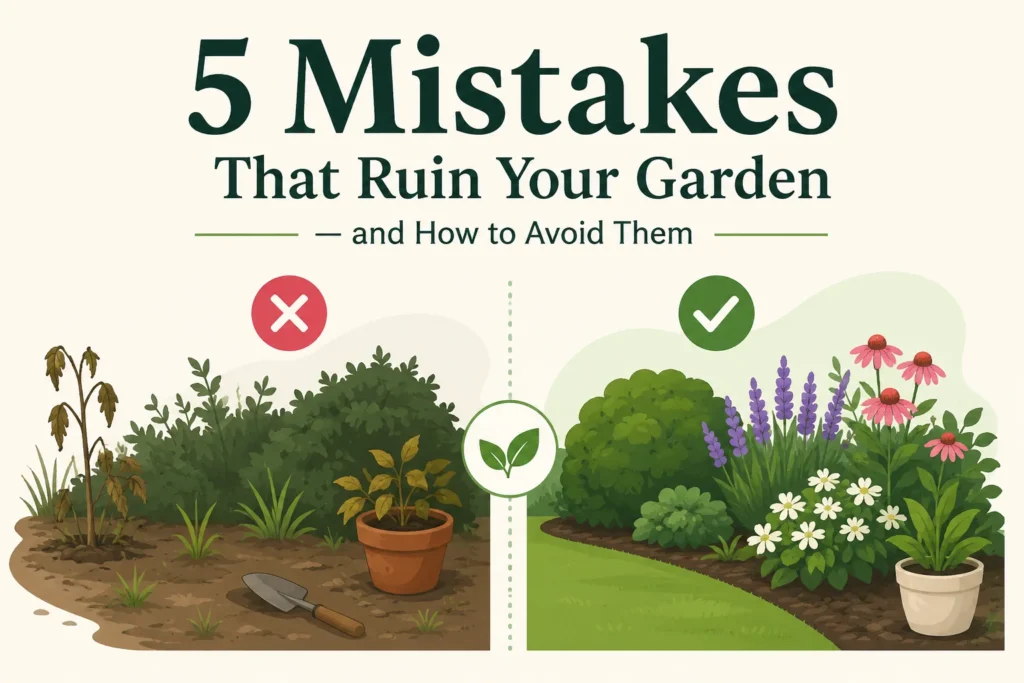
Even the most passionate gardeners make the same recurring mistakes — mistakes that quietly undo weeks of hard work. Here are the five most common errors we see, and exactly what to do instead.
Mistake #1 – Overwatering (or Underwatering)
Water is the single most mismanaged resource in the garden. Overwatering is, counter-intuitively, the more common mistake — and the more damaging one. Waterlogged soil suffocates roots and creates the perfect conditions for root rot and fungal diseases. The soggy, yellowing leaves of an overwatered plant are frequently misread as signs of thirst, leading gardeners to add even more water.
The rule of thumb is simple: water deeply but infrequently. Push your finger 5–7 cm into the soil. If it still feels moist, wait. If it’s dry, water thoroughly — enough that moisture reaches the full root zone, not just the surface. For most plants in temperate European climates, this means watering two to three times per week in summer, and far less (or not at all) in cooler months.
Water in the early morning, at the base of the plant. Avoid wetting foliage, which encourages fungal problems. Mulching the soil surface with bark or straw dramatically reduces evaporation and helps maintain even soil moisture between waterings.
Mistake #2 – Planting in the Wrong Location
It sounds obvious, but a shade-loving plant placed in full sun — or a sun-lover tucked behind a wall — will struggle no matter how well you water and feed it. Before buying any plant, research its light, soil, and drainage requirements, then match those to the actual conditions in your garden.
This is especially important for hedging plants and trees, which are expensive and slow to replace if they fail. Spend five minutes checking a plant’s needs online before purchasing. Your local microclimate also matters: a walled south-facing border can be significantly warmer and drier than a north-facing bed just ten metres away.
Mistake #3 – Neglecting the Soil
Plants are only as healthy as the soil they grow in, yet soil care is the most frequently neglected aspect of gardening. Compacted, nutrient-poor soil produces weak, slow-growing plants that are more susceptible to pest and disease attack. Investing in your soil is the single highest-return action you can take in the garden.
- Add organic matter — compost, well-rotted manure, or leaf mould — every autumn. This improves both drainage and water retention, and slowly releases nutrients.
- Avoid working wet soil. Walking on or digging waterlogged ground compacts it and destroys the structure built up over months.
- Test your soil pH every few years. Most plants prefer a slightly acidic pH of 6.0–6.5. Hydrangeas, blueberries, and rhododendrons require genuinely acid conditions (pH 4.5–5.5).
- Leave worm casts and organic debris on the surface rather than raking everything away. These are free fertiliser and food for soil microbes.
Mistake #4 – Letting Weeds Set Seed
A single mature weed can produce thousands of seeds, each capable of lying dormant in the soil for years before germinating. The most effective weed control strategy is not chemical sprays or hours of back-breaking digging — it’s timing. Remove weeds before they flower, and you prevent the next generation entirely.
A sharp hoe used on a dry, sunny day is remarkably effective: cut the weed stems at soil level and leave them on the surface. Within hours, the sun desiccates the roots and they die without spreading. Mulching bare soil is the next line of defence — a 7–8 cm layer of bark chippings blocks light and prevents most weed seeds from germinating in the first place.
The single most effective weed-control habit: spend 10 minutes in the garden three times a week rather than one exhausting two-hour session every fortnight. Little and often beats occasional marathon sessions every time — and your back will thank you.
Mistake #5 – Using Blunt or Wrong-Sized Tools
The right tool, in good condition, makes any garden task faster and easier. The wrong tool — or the right tool with a blunt blade — turns a simple job into a frustrating ordeal and often damages plants in the process. Blunt secateurs crush rather than cut, leaving ragged wounds that heal slowly and attract disease. A hedge trimmer that’s too small for the job leaves you working twice as long; one that’s too large becomes unwieldy and imprecise.
Audit your tools at the start of each growing season. Sharpen blades, oil moving parts, and replace anything that’s genuinely past its useful life. Modern battery-powered garden tools have transformed domestic gardening: they’re lighter, quieter, and more capable than their petrol counterparts, with none of the maintenance headaches. If you’re still working with hand tools alone for jobs that could be done electrically, you’re spending significantly more time and effort than you need to.
After each session, wipe metal blades with an oily cloth to prevent rust. Store tools hanging up, not piled in a corner — this protects the edges and makes them easier to find next time.
The Bottom Line
Great gardens aren’t the result of rare talent or unlimited budgets. They’re built on consistent, well-informed habits: watering correctly, matching plants to their environment, caring for the soil, staying on top of weeds, and using the right tools for each task. Fix these five fundamentals and everything else in the garden becomes easier — and more enjoyable.
- info@gigamarkit.com